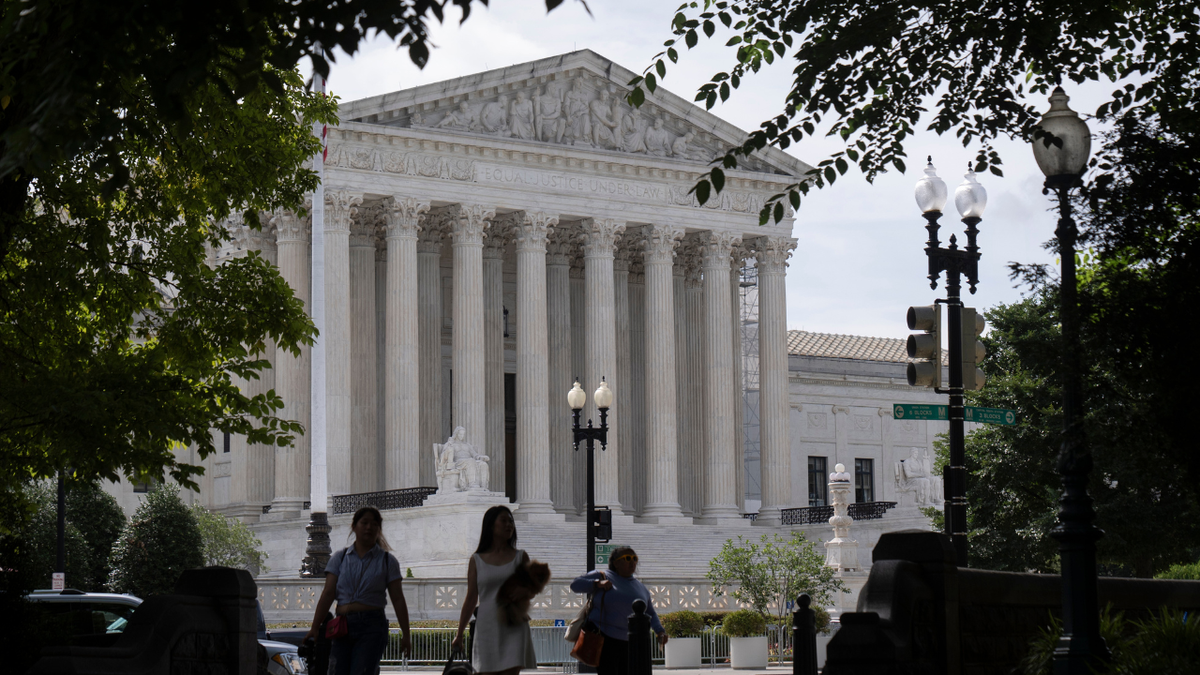
The fate of thousands of Haitian and Syrian immigrants living legally in the U.S. hinges on a high-stakes legal battle now before the Supreme Court. At the center: whether the Trump administration had the authority to terminate Temporary Protected Status (TPS) for nationals from these countries, citing changed conditions back home. The decision could redefine the boundaries of executive power in immigration and determine whether hundreds of thousands risk deportation despite decades of integration into American communities.
This case isn’t just about policy—it’s about people. Many TPS holders from Haiti and Syria arrived after natural disasters and civil wars, built lives, raised U.S.-born children, and contributed to local economies. Now, they face uncertainty as the Court weighs whether the administration’s termination of their protected status was lawful—or an overreach masked as administrative discretion.
What Is Temporary Protected Status?
Temporary Protected Status is a humanitarian immigration program established by Congress in 1990 under the Immigration and Nationality Act. It allows foreign nationals from designated countries—those facing armed conflict, environmental disaster, or other extraordinary but temporary conditions—to remain and work legally in the United States until it’s safe to return.
Designations are typically reviewed every 6 to 18 months. The Department of Homeland Security (DHS) can extend, terminate, or redesignate a country based on ongoing conditions. Once TPS ends, individuals revert to whatever immigration status they held before (if any), or face removal proceedings.
Key facts about TPS: - TPS does not lead to a green card or citizenship - Holders pay taxes, pass background checks, and comply with U.S. laws - Over 500,000 people currently hold TPS from 14 countries - Major TPS populations include Haiti, El Salvador, Syria, Venezuela, and Yemen
For Haitians, TPS was first granted in 2010 after a catastrophic earthquake destroyed infrastructure and displaced over a million people. For Syrians, it was designated in 2015 during the height of civil war, with government violence, displacement, and humanitarian collapse making return impossible.
Trump’s Move to Terminate TPS
In 2017 and 2018, the Trump administration announced the end of TPS for several countries, including Haiti, Syria, El Salvador, Nicaragua, and Sudan. Officials argued that the “temporary” nature of TPS meant it should not be extended indefinitely, especially as conditions improved—or could be managed through repatriation.
The rationale: > “The extraordinary, temporary conditions that once prevented Haitians from returning safely no longer exist,” DHS stated in its 2017 notice.
But critics disputed this assessment. In Haiti, cholera outbreaks, gang violence, and political instability continued. In Syria, over half the population remains displaced, with infrastructure decimated and human rights abuses ongoing.
Legal challenges immediately followed. Advocacy groups, states, and affected individuals argued the administration’s decisions were arbitrary, capricious, and violated the Administrative Procedure Act (APA), which governs federal rulemaking.
The Legal Challenge: Arbitrary and Capricious?
At the heart of the Supreme Court case is whether the government followed proper procedure in ending TPS. Plaintiffs argue DHS failed to adequately justify its decisions, ignored evidence of ongoing dangers, and effectively punished immigrants for delays in congressional immigration reform.
The APA requires agencies to provide reasoned explanations for major policy shifts. Courts have previously blocked similar TPS terminations. In 2021, a federal judge in California ruled that ending TPS for Haiti, El Salvador, and others was likely done in an “arbitrary and capricious” manner, especially given evidence of discrimination and political motivation.

One key legal question: Does the Secretary of Homeland Security have unfettered discretion to end TPS, or must they follow specific statutory criteria?
Lower courts have split. The Ninth Circuit sided with TPS holders, saying the government must provide a legitimate basis for termination. The Fifth Circuit has deferred more to executive authority.
Now, the Supreme Court must reconcile these views—and potentially set a national precedent.
Real Lives on the Line
Numbers fade when you meet actual TPS holders. Take Marie D., a 48-year-old Haitian nurse in Miami who arrived in 2012 after her home in Port-au-Prince collapsed. She has two U.S.-born children, owns a small home, and works at a community health clinic. Her TPS renewal has been her lifeline.
“If I go back, I don’t know how I’d survive,” she said. “There’s no hospital, no electricity, and my kids have never even seen Haiti.”
Similarly, Khaled A., a Syrian mechanic in Dearborn, Michigan, fled Aleppo in 2014 after his workshop was bombed. He rebuilt his life, opened a garage with two employees, and sends money to relatives in refugee camps. “They say ‘conditions improved’—but they haven’t been there,” he said. “My city is rubble.”
These aren’t isolated stories. An estimated 80,000 Haitians and 7,000 Syrians currently live under TPS. Many have been in the U.S. for over a decade. Their children are American citizens. They pay $165 million in taxes annually and contribute to sectors like healthcare, construction, and transportation.
Forcing them to leave wouldn’t just uproot families—it could strain fragile home countries unable to absorb returnees.
The Broader Implications of the Ruling
The Supreme Court’s decision will ripple far beyond Haiti and Syria. It could determine:
- Executive power in immigration: Will future administrations have broad leeway to end humanitarian programs without detailed justification?
- Congressional inaction: With no permanent solution for TPS holders, the courts are left to fill legislative gaps.
- Precedent for other protected groups: If TPS terminations stand, similar actions against Venezuelans, Yemenis, or Sudanese could follow.
There’s also a diplomatic dimension. Sending vulnerable populations back to unstable regions may undermine U.S. foreign policy goals and humanitarian leadership.
Moreover, mass deportations would be logistically complex and costly. Unlike undocumented immigrants, many TPS holders are deeply embedded in communities. Removing them would require detention, transport, and reintegration support—none of which are currently funded or planned.
Past Precedents and Judicial Pushback
The Supreme Court has a mixed history with immigration enforcement cases.
In Department of Homeland Security v. Regents of the University of California (2020), the Court blocked the Trump administration’s attempt to end DACA, ruling the decision was “arbitrary and capricious” under the APA. That ruling gave hope to TPS advocates.
However, in Trump v. Hawaii (2018), the Court upheld the so-called “travel ban,” deferring to national security claims. That precedent gives the executive branch wide latitude in immigration matters.
The current TPS case sits in the gray zone: it’s not a national security issue, but a humanitarian one wrapped in administrative procedure. The Court’s conservative majority may lean toward executive discretion, but the factual record—showing continued instability in Haiti and Syria—could prompt skepticism.
What Happens If TPS Is Terminated?
If the Supreme Court upholds the termination, DHS could begin removing Haitian and Syrian TPS holders as early as 2025, depending on designation timelines and litigation holds.
Possible outcomes:

| Scenario | Impact |
|---|---|
| Immediate termination | Mass deportations, family separation, legal chaos |
| Phased removal with grace period | Allows time to prepare, but still disruptive |
| Congressional intervention | Possible path to permanent status (e.g., via legislation) |
| New injunctions | Delays removal but doesn’t resolve core issue |
Even with a termination ruling, enforcement may be limited. ICE has prioritized criminal aliens, not long-term legal residents. But the threat remains—and so does the anxiety.
A Path Forward: Policy and Advocacy
While the Court decides, advocates push for permanent solutions.
Key legislative efforts include:
- The U.S. Citizenship Act of 2021 (proposed): Would allow certain TPS holders to apply for green cards after meeting requirements.
- The American Dream and Promise Act: Passed the House in 2021 and 2023, would grant conditional permanent residence to long-term TPS and DED holders.
- State-level protections: Some states, like California and New York, offer driver’s licenses, work permits, and healthcare access regardless of federal status.
But without federal action, TPS remains a stopgap—not a solution.
Practical advice for TPS holders:
- Stay informed: Monitor USCIS updates and consult immigration attorneys
- Renew on time: Even during litigation, maintain lawful status
- Explore alternatives: Some may qualify for asylum, family sponsorship, or U visas
- Document contributions: Keep records of taxes, employment, and community ties—useful for future relief efforts
The Decision Is More Than Legal—It’s Moral
The Supreme Court isn’t just interpreting statutes. It’s weighing human dignity against bureaucratic finality.
TPS was never meant to be a permanent fix—yet the failure of Congress to pass immigration reform has made it a de facto status for hundreds of thousands. Ending it abruptly, without a pathway forward, risks punishing people for a broken system.
The administration argued TPS was being used as a “backdoor to immigration.” But that ignores reality: TPS holders aren’t sneaking in. They’re reporting, paying fees, and living openly. They’re the opposite of undocumented.
If the Court rules in favor of termination, it may be legally defensible—but ethically questionable. If it sides with TPS holders, it affirms that policy decisions must be grounded in facts, not political convenience.
Either way, the ball will return to Congress. Only legislation can provide lasting stability.
For now, Haitians and Syrians wait—watching a court case that could decide whether they get to keep the lives they’ve built.
Frequently Asked Questions
Can TPS holders apply for citizenship? No, TPS does not lead directly to citizenship. However, some may qualify through other means, like family sponsorship or asylum.
Why did the U.S. grant TPS to Haiti and Syria? Haiti received TPS after the 2010 earthquake; Syria after the civil war began in 2011. Both situations involved widespread violence, displacement, and infrastructure collapse.
Has the Biden administration reversed Trump’s TPS terminations? Not fully. While some designations have been extended (e.g., Haiti through 2025), the underlying legal challenges remain unresolved.
What happens if TPS ends and I don’t leave? You could lose work authorization and become subject to deportation. However, ICE typically prioritizes recent arrivals or those with criminal records.
Are children of TPS holders U.S. citizens? Yes, if born in the U.S., they are citizens by birthright under the 14th Amendment.
Can TPS holders travel outside the U.S.? Only with advance permission (a travel document). Without it, leaving may void their status.
Is there a way to extend TPS permanently? Not currently. Only Congress can create a permanent pathway, such as through legislation granting legal status to long-term TPS holders.
FAQ
What should you look for in Supreme Court Weighs Trump’s Bid to End TPS for Haitians, Syrians? Focus on relevance, practical value, and how well the solution matches real user intent.
Is Supreme Court Weighs Trump’s Bid to End TPS for Haitians, Syrians suitable for beginners? That depends on the workflow, but a clear step-by-step approach usually makes it easier to start.
How do you compare options around Supreme Court Weighs Trump’s Bid to End TPS for Haitians, Syrians? Compare features, trust signals, limitations, pricing, and ease of implementation.
What mistakes should you avoid? Avoid generic choices, weak validation, and decisions based only on marketing claims.
What is the next best step? Shortlist the most relevant options, validate them quickly, and refine from real-world results.