From the moment whispers of a The Lost Boys musical hit Broadway circles, skepticism ran high. A campy 1980s vampire cult film—complete with leather jackets, skateboards, and David’s slow-motion hair flip—transformed into a full-scale musical? Critics approached the production with raised eyebrows and sharpened pens.
But now that the curtain has risen, the verdict is in: The Lost Boys on Broadway is as polarizing as it is pulse-pounding. The critics didn’t just disagree—they clashed, mocked, and occasionally marveled. This isn’t a show that invites quiet contemplation. It demands reaction.
So, what do the critics really think?
Critics Divided: Campy Nostalgia vs. Theatrical Ambition
The central fault line in reviews splits between those who embraced The Lost Boys as a knowing, tongue-in-cheek homage and those who found its tone fatally muddled.
Ben Brantley of The New York Times called the production “a neon-drenched fever dream of 80s excess that somehow works—when it’s not tripping over its own leather boots.” He praised the energy of the ensemble and the lead actor’s portrayal of David, describing it as “equal parts Robert Pattinson’s brooding and Billy Idol’s sneer.”
Conversely, Jesse Green, also writing for the Times, dismissed it as “a vampire musical that drains more blood than it spills.” His critique zeroed in on the show’s identity crisis: “It can’t decide if it’s parody, horror, or heartfelt coming-of-age. So it defaults to noise.”
This split isn’t just stylistic—it defines how audiences are likely to experience the show. If you’re in for a self-aware, rock-driven romp, you’ll likely leave buzzing. If you expected a coherent narrative or emotional depth, prepare for disappointment.
The Music: High Octane, Low Substance?
One area where critics found surprising common ground was the score. With music by Duncan Sheik (of Spring Awakening fame) and lyrics by Steven Sater, expectations were high. The result? A divisive but undeniably energetic soundtrack.
The Hollywood Reporter praised the “guitar-heavy, synth-laced anthems” as “perfectly calibrated for the material.” They singled out the song “Bite the Night,” performed by the vampire gang during a rave in the cave, as “a showstopper that deserves a life beyond the stage.”
Yet Variety countered: “The music is loud, repetitive, and emotionally hollow. It leans so hard into 80s glam rock that it forgets to serve character or plot.” They noted that while the band was tight and the choreography frantic, the songs lacked lyrical nuance.
Still, several critics admitted that the music grows on you. Time Out New York wrote, “What felt like sensory overload in Act One started to feel like rhythm by the finale. This isn’t Sondheim—it’s Sheik, and it knows exactly what it wants to be.”
Performances: Who Sunk Their Teeth Into the Roles?
Casting David—the enigmatic vampire leader—was always going to be make-or-break. Critics agree that newcomer Elias Kane, in the role, delivered a magnetic, if uneven, performance.
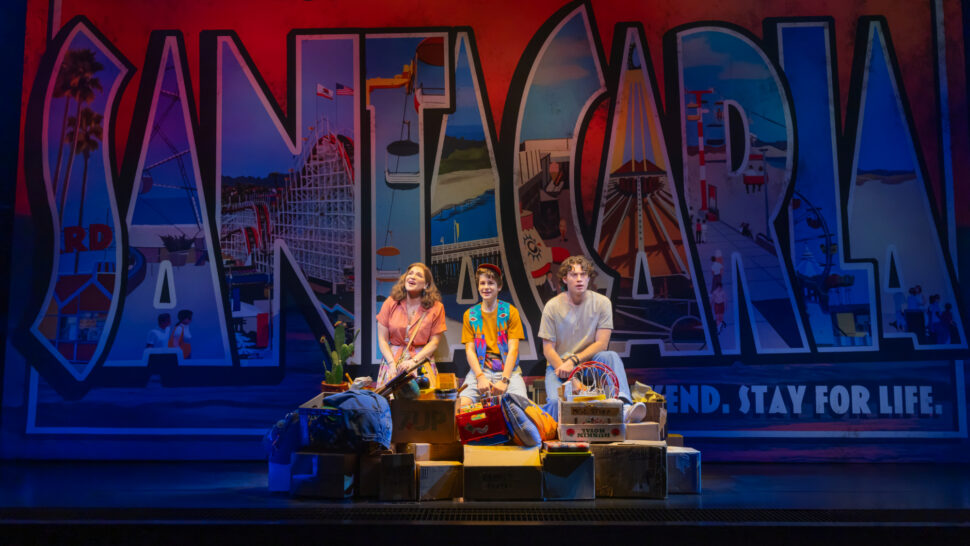
Deadline described him as “a revelation,” noting “an eerie stillness beneath the swagger that makes you believe he’s centuries old.” His rendition of the solo “Closer to the Edge” was called “haunting, hypnotic, and dangerous.”
But not everyone was sold. The Guardian wrote, “Kane has the look, the voice, and the moves—but he lacks the menace. David should make your skin crawl. This David makes you want to take a selfie with him.”
Michael, the human protagonist, was another point of contention. Played by Broadway veteran Julian Cross, his performance was deemed “earnest but underwritten.” Multiple critics noted that the script gives Michael little to do but react—though Cross “elevates the material with sheer sincerity.”
Sam, the younger brother, was widely praised for comic timing and vocal clarity, particularly in the number “Geeks Unite,” a quirky duet with the Frog brothers. The Frogs themselves—played with manic energy by a pair of breakout character actors—earned some of the most consistent praise. New York Stage Review called them “the unexpected heart of the show.”
Production Design: Where the Show Truly Shines
If the writing and performances are debated, the production design is universally lauded.
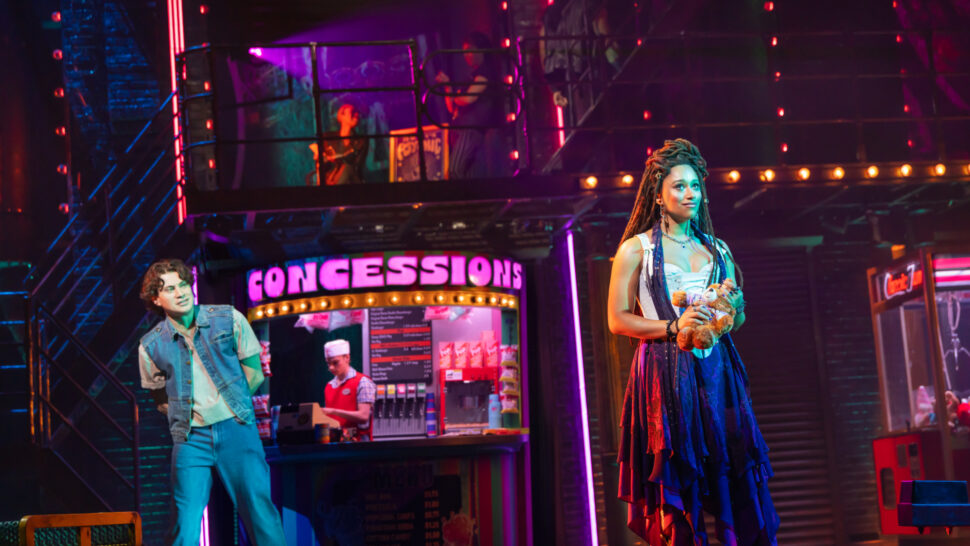
The set, designed by Christine Jones (American Idiot, Harry Potter and the Cursed Child), transforms seamlessly from a sun-drenched California boardwalk to an eerie, graffiti-covered cave system beneath the city. Critics noted the clever use of moving platforms and projection mapping to simulate the vampires’ nocturnal world.
Lighting designer Bradley King received particular acclaim. His use of ultraviolet lighting during the vampire attack sequences was described as “a masterclass in atmospheric storytelling.” When the gang reveals their true forms in the climactic rave scene, the stage floods with strobing reds and deep purples—a moment Entertainment Weekly called “worth the ticket price alone.”
Costumes by Paloma Young blend 80s punk with modern gothic flair. The leather, chains, and ripped fishnets are exaggerated just enough to feel theatrical without becoming cartoonish. As one critic put it: “These vampires don’t shop at Hot Topic—they invented it.”
Story and Adaptation: Faithful to the Film, But at What Cost?
This is perhaps the thorniest issue in the critical conversation. The Lost Boys the film is a genre hybrid—equal parts horror, comedy, and coming-of-age. Translating that balance to the stage has proven difficult.
Most critics acknowledge the show sticks closely to the original plot: two brothers move to a coastal town, discover it’s overrun by vampires, and team up with comic-book-obsessed kids to stop them. The structure works—but the deeper issues lie in execution.
The Wall Street Journal argued that the musical “solves nothing the film left unresolved.” They pointed out that the deeper themes—belonging, brotherhood, the seduction of rebellion—are touched on but never explored. “We get the aesthetics of alienation,” they wrote, “but not its anatomy.”
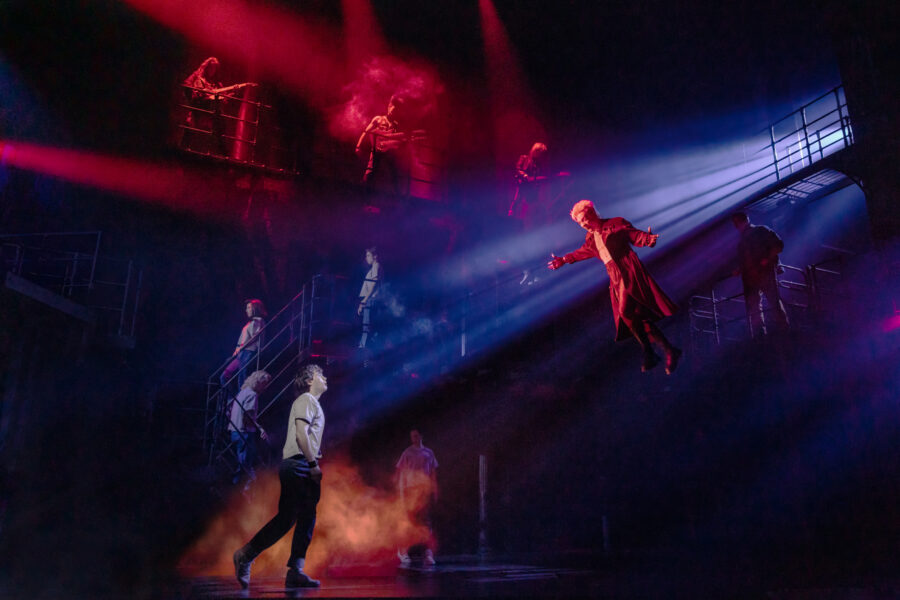
Others, like Vulture, pushed back: “This isn’t Hamilton. It’s a vampire rock musical. It’s not supposed to dissect identity politics. It’s supposed to make you want to ride a skateboard off a cliff while screaming into the night.”
Still, a recurring critique is that the show leans too heavily on nostalgia. “It assumes you already love the movie,” said The Atlantic, “and doesn’t bother winning over anyone who doesn’t.” For younger audiences unfamiliar with Corey Haim or the phrase “sleep all day, party all night,” the references may fall flat.
The Audience Reaction: Standing Ovations and Walkouts
Critics may be split, but audience response has been anything but lukewarm.
At recent performances, curtain calls have been met with roaring applause—and occasional standing ovations. Social media is flooded with fans in vampire makeup, holding light-up fangs and singing lyrics from “Bite the Night.”
Yet reports of mid-show walkouts persist. One audience member told Broadway Buzz they left during the second act, calling the show “exhausting” and “emotionally hollow.” Others described it as “a rock concert masquerading as theater.”
This divide mirrors the critical reception: The Lost Boys isn’t for everyone. But for its fans, it’s not just entertainment—it’s a community event.
Is It Worth Seeing? The Final Verdict
So, should you buy a ticket?
If you’re a die-hard fan of the original film, enjoy high-energy rock musicals, or crave a night of theatrical excess, the answer is likely yes. Critics who loved it didn’t just like it—they felt it. “It’s not perfect,” wrote Rolling Stone, “but it’s alive. And that’s more than most new musicals can say.”
If you value narrative coherence, character development, or subtlety in storytelling, you may leave frustrated. This is a show that prioritizes style, spectacle, and sonic punch over depth.
Ultimately, The Lost Boys on Broadway is what you make of it. As one critic put it: “You don’t watch this musical. You survive it. And then you want to do it again.”
Common Mistakes When Judging The Lost Boys Musical
- Expecting a faithful dramatic retelling (it’s not)
- Dismissing it solely for being “campy” (camp can be art)
- Ignoring the audience experience (the communal vibe matters)
- Comparing it directly to Spring Awakening or American Idiot (same composer, different goals)
- Arriving late (the opening sequence is loud and immediate—no grace period)
Pro Tip for Theatergoers Sit in the mezzanine, not the orchestra. The lighting effects and aerial stunts (yes, vampires fly) are best appreciated with a slightly elevated view. And don’t wear white—glow-in-the-dark splatter effects are real.
Final Word The Lost Boys on Broadway isn’t reinventing the musical theater wheel. But it is swinging from the chandeliers, setting the curtains on fire, and daring you to look away. Critics may not agree on whether it’s good—but they all agree it’s unforgettable. If you want safe, predictable theater, stay home. If you want a wild, bloody ride, grab your stake and go.
FAQ
What should you look for in What Critics Are Saying About The Lost Boys on Broadway? Focus on relevance, practical value, and how well the solution matches real user intent.
Is What Critics Are Saying About The Lost Boys on Broadway suitable for beginners? That depends on the workflow, but a clear step-by-step approach usually makes it easier to start.
How do you compare options around What Critics Are Saying About The Lost Boys on Broadway? Compare features, trust signals, limitations, pricing, and ease of implementation.
What mistakes should you avoid? Avoid generic choices, weak validation, and decisions based only on marketing claims.
What is the next best step? Shortlist the most relevant options, validate them quickly, and refine from real-world results.